


What Archery Training Teaches Us About Discipline, Awareness, and Real Progress
- Emmanuel Manolakakis

- Mar 16
- 5 min read
Most people believe the biggest barrier to improvement is discipline.
If we could just become more disciplined, more focused, more consistent—then everything would fall into place. Better habits. Better performance. Better results.
For years, I believed this too. Like many people interested in personal growth, I experimented with systems. Planners. Strict routines. Productivity frameworks. Habit trackers. The promise was always the same: if you structure your life correctly and push yourself hard enough, you will eventually become the disciplined person you want to be.
But something interesting happens when you spend enough time training seriously—whether in martial arts, athletics, or archery training in East York.
You begin to realize discipline is not the real driver of improvement.
Awareness is.
The Willpower Myth
Stanford psychologist Kelly McGonigal spent years studying self-control. Her research revealed something surprising: people who appear to have exceptional willpower are not necessarily better at resisting temptation.
They simply structure their lives so they avoid temptation in the first place.
In other words, they rely less on brute discipline and more on intelligent awareness of their own behaviour.
McGonigal explains that the biggest enemies of willpower are:
temptation
stress
self-criticism
The foundation of real self-control, she argues, comes from three skills:
self-awareness
self-care
remembering what matters most
This may sound like modern psychology, but anyone who has spent time in serious training environments already understands this principle intuitively.
Training exposes patterns.
And few activities reveal those patterns as clearly as archery.
What Archery Teaches About Control
One of the first lessons people discover when they begin archery training in East York is that you cannot force accuracy.
The instinct of most beginners is to try harder.
Hold tighter.
Aim longer.
Concentrate more intensely.
But the paradox of archery is that the harder you try to control the shot, the worse the shot often becomes.
Tension enters the body.
Breathing becomes shallow.
The release becomes rushed.
And the arrow drifts off center.
Experienced archers learn something different. Instead of trying to force perfect shots, they develop awareness of the process behind the shot.
They begin to notice:
tension in the bow hand
shoulder alignment
breathing rhythm
mental focus
Rather than fighting mistakes, they observe them.
And that observation creates space to correct them.
Awareness Interrupts Automatic Behaviour
Much of our behaviour in daily life happens automatically.
You don’t consciously decide to check your phone dozens of times a day. The habit fires before your thinking brain even catches up.
Discipline tries to override these patterns through force.
But force rarely works long term.
Awareness, however, can interrupt the pattern.
When you begin noticing the moment a habit starts, a small gap appears between the trigger and the reaction. In that gap, you suddenly have a choice.
This principle shows up clearly during archery training in East York.
Every experienced archer knows the feeling of a shot that isn’t quite right. The aim is drifting. The tension is wrong. The release timing feels rushed.
Beginners fire the arrow anyway.
Experienced archers let down.
They pause.
They reset.
They become observers of their own process.
This ability to notice what is happening before the shot is released is one of the quiet skills behind accurate shooting.
Curiosity Instead of Self-Criticism
Another lesson archery teaches is the value of curiosity.
When shots begin to fall outside the center, the natural reaction is frustration. Many archers try to power through mistakes, shooting faster and harder in an attempt to fix the problem through effort.
But experienced shooters take a different approach.
They step off the line and ask questions.
What changed?
Was it fatigue?
Grip pressure?
Wind?
Mental tension?
This simple shift—from judgment to curiosity—can transform practice.
Instead of reinforcing bad habits, the archer begins to understand the patterns behind the mistakes.
This principle applies far beyond the archery range.
When we resist a task or procrastinate, discipline tells us to push harder. But awareness asks a different question: why is this happening?
Sometimes the answer is fear.
Sometimes the task itself lacks meaning.
Sometimes the mind simply needs rest.
Different problems require different solutions.
Why Training Matters
Training environments matter because they give us space to develop this kind of awareness.
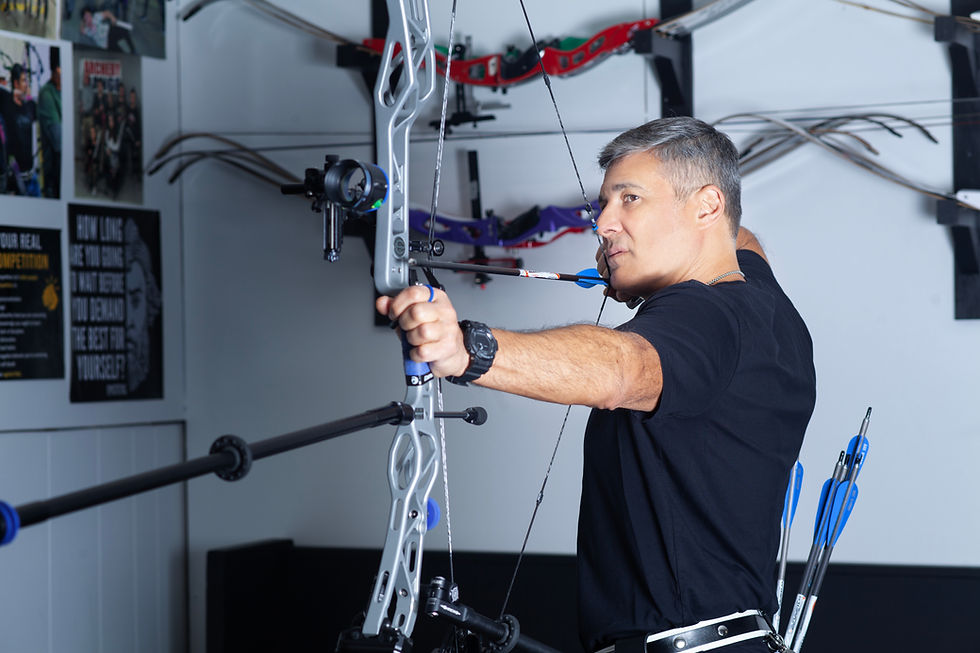
At FightClub, students who participate in archery training in East York are not just learning how to shoot a bow. They are learning how attention shapes performance.
Each arrow becomes feedback.
Each shot reveals something about posture, breathing, and mental state.
Over time, archers develop a deeper relationship with the process.
They learn to feel subtle shifts in tension. They recognize when focus drifts. They notice when fatigue begins to affect their shots.
And because they notice these things earlier, they adjust sooner.
Improvement begins to happen naturally.
Not through brute discipline—but through understanding.
The Real Goal of Training
Modern culture often celebrates extreme discipline. We admire people who grind relentlessly, push through exhaustion, and force themselves to perform.
But real mastery tends to look different.
Mastery is built through consistent attention.
Through thousands of small adjustments.
Through the willingness to observe rather than simply react.
This is why activities like martial arts and archery training in East York attract people who are interested not only in physical skill, but also in personal development.
Training becomes a mirror.
It shows us our patterns, our habits, and our reactions under pressure.
And once we can see those patterns, we can begin to change them.
A Better Approach to Progress
Awareness will not make life effortless.
You will still miss targets.
You will still struggle with habits.
You will still face moments of doubt and resistance.
But awareness changes your relationship to those experiences.
Instead of fighting yourself, you begin to understand yourself.
Instead of forcing results, you begin to create the conditions that produce them.
And over time, something remarkable happens.
You start finishing the things that truly matter.
You rest when you need to without guilt.
You push when the challenge is meaningful.
You step back when the struggle is pointless.
The goal is not to become a perfectly disciplined machine.
The goal is to become someone who is conscious of their choices.
Someone who is paying attention.
And sometimes the simplest way to begin developing that awareness is to stand quietly on a shooting line, draw a bow, breathe slowly, and watch where the arrow lands.
Interested in trying archery?
FightClub offers structured archery training in East York for beginners and experienced shooters who want to improve their focus, precision, and awareness. Whether you're new to the sport or looking to refine your technique, our training sessions provide a supportive environment to develop both skill and concentration.
Visit fight-club.ca to learn more and experience archery training in East York for yourself.


Comments