


Self -Defence Training in Toronto

Most people think of self-defence as a collection of techniques—what punch to throw, what block to use, how to “win” a confrontation. But anyone who has lived in a big city knows that real situations don’t arrive neatly organized. They arrive suddenly, often in crowded spaces, with noise, emotion, and uncertainty layered on top of physical threat.
This is especially true in urban environments like Toronto.
Systema’s approach to multiple opponents grew out of this reality. In our self-defence training in Toronto, we don’t begin by teaching people how to fight several attackers at once. Instead, we begin by teaching them how to stay functional when pressure comes from every direction.
Because the greatest danger in real confrontations isn’t the number of people involved—it’s panic.
When stress spikes, breathing shortens. Vision narrows. The body locks up. Even strong, athletic people can freeze when they feel overwhelmed. Systema training acknowledges this openly. Rather than denying fear, we work directly with it. Students are gradually exposed to pressure in a controlled way so they can learn to breathe, move, and think clearly even when things feel chaotic.
In training, someone may step into your space while another moves behind you. There is no choreography. No expectation to overpower anyone. The lesson is simple but demanding: stay aware, stay mobile, stay connected to your breath.
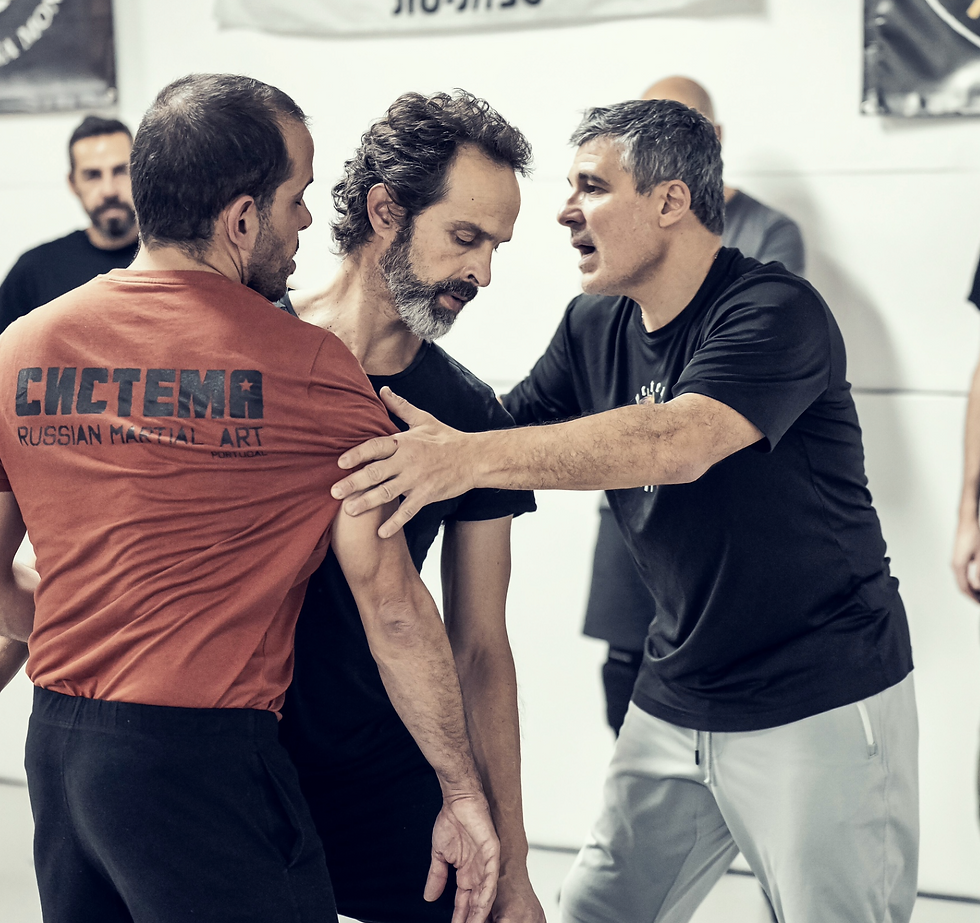
Over time, students begin to feel something shift internally.
They start to understand spacing—not as a strategy they memorized, but as a living awareness in their body. They learn how small movements can prevent being surrounded. How positioning matters more than speed. How constant motion—calm, efficient motion—keeps options open.
This is one of the core insights of Systema self-defence training in Toronto: you don’t defeat multiple opponents by force. You manage them through awareness, positioning, and movement.
And the objective is never domination.
The objective is escape.
Systema trains people to protect themselves while creating pathways out of danger. Students learn how to move through doorways, along walls, around obstacles, and into open space. They learn how to use the environment intelligently, something especially relevant in urban self-defence scenarios—parking lots, stairwells, transit platforms, sidewalks, and confined indoor spaces.
Equally important is energy management. When adrenaline hits, people often burn themselves out in seconds. Systema emphasizes relaxed power and efficiency. Movements are economical. Decisions are simple. This allows practitioners to remain functional longer, increasing the chance of disengaging safely rather than escalating the situation.
What often surprises people most is how deeply this training carries into daily life.
After experiencing controlled pressure from multiple directions, everyday stress begins to feel different. Standing on a crowded subway platform. Navigating busy streets. Dealing with confrontation at work or in personal relationships. These moments no longer feel as overwhelming because the body has learned how to stay regulated under stress.
Breathing remains steady. Awareness stays wide. The nervous system doesn’t hijack the moment.
This is why Systema self-defence training in Toronto appeals to such a wide range of people—professionals, parents, older adults, and those with no previous martial arts experience. It’s not about being aggressive or dominant. It’s about becoming resilient.
Learning to deal with multiple opponents through Systema isn’t about preparing for violence—it’s about preparing for unpredictability. It’s about developing the ability to remain calm, adaptable, and grounded when circumstances stop being ideal.
In a city as dynamic and fast-moving as Toronto, this skill has value far beyond physical self-defence.
Systema teaches people how to move through chaos without being consumed by it. How to recognize danger early. How to stay human under pressure. And how to find a way through rather than trying to fight everything head-on.
At its core, this is what real self-defence training in Toronto should offer—not fear, not bravado, but quiet confidence. The confidence that when things become uncertain, you can breathe, move, and choose your way forward.


Comments